
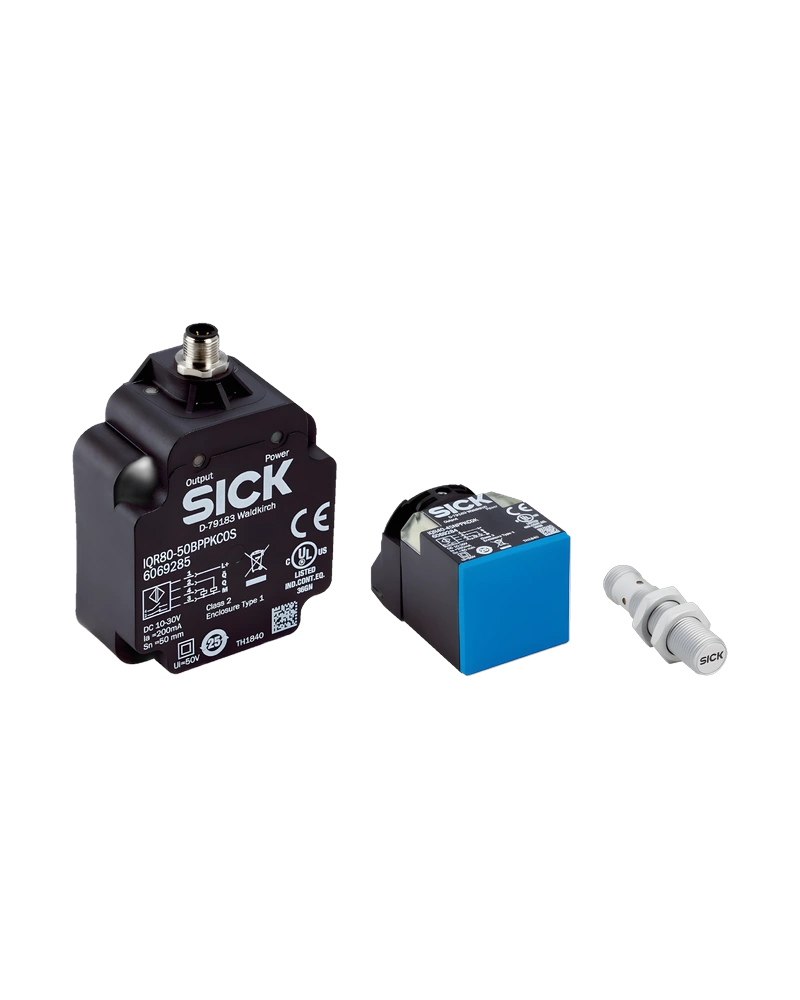
Explore performance details, construction highlights, applications, and technical information in one clear overview.
The SICK IMR inductive proximity sensor delivers reliable, safe detection of all metallic materials across extended distances using the reduction factor 1 principle. Designed for demanding industrial environments, these sensors provide consistent performance regardless of metal type, ensuring accurate detection without compromise. With sensing ranges up to 75 mm, the IMR series maximizes operational safety and uptime by minimizing mechanical stress on sensor components. This makes it ideal for applications where long-range detection is required while maintaining high reliability. The sensor’s ability to detect all metals at the largest possible distance ensures comprehensive coverage in complex production settings. As a best-in-class solution for welding environments, the IMR offers robust performance under intense electromagnetic conditions.
The IMR series leverages a high-strength magnetic field and exceptional welding field strength to ensure reliable detection even in harsh welding environments. Operating on the reduction factor 1 principle, it detects all metals within its sensing range without variation based on material type. This technology enables safe and consistent detection across a wide spectrum of metallic objects at maximum possible distance. The sensor’s very high magnet field ensures strong signal generation, while its resistance to electromagnetic interference makes it ideal for use near welding arcs or other high-field sources. This combination provides superior performance in dynamic industrial processes where metal presence must be reliably identified under extreme conditions.
The IMR inductive proximity sensors offer a sensing range of up to 75 mm, enabling detection of all metals within this distance. The reduction factor 1 principle ensures uniform performance across different metallic materials. This high sensing range reduces mechanical stress on the sensor, contributing to lower failure rates and increased plant availability. Detection is based on changes in the magnetic field caused by nearby metal objects, allowing for reliable and non-contact operation. The sensors are engineered to maintain consistent detection accuracy regardless of target material, making them suitable for diverse industrial applications where metal presence must be confirmed at extended distances.
The IMR inductive proximity sensor is designed for straightforward integration into existing control systems. It features standard electrical interfaces compatible with most industrial automation systems, allowing seamless connection to PLCs or HMIs. The sensor’s output signal provides a clear on/off indication of metal presence, enabling direct use in safety and process control circuits. No additional configuration is required for basic operation—only proper wiring and power supply setup. Its compact design and robust construction support easy installation in tight spaces. Integration with automated systems ensures real-time feedback for reliable monitoring of metal objects in motion or at rest.
The IMR sensors are designed to operate reliably in industrial environments with high electromagnetic interference, such as welding zones. Their very high magnet field strength and resistance to welding fields ensure stable performance even under intense magnetic exposure. The sensors can function effectively in dusty, humid, or hot conditions typical of manufacturing floors. While specific environmental ratings are not provided, their design supports long-term durability in demanding settings. They are suitable for use near arc welding operations where electromagnetic noise could otherwise interfere with detection accuracy.
The IMR sensor is the best selection for welding applications due to its ability to safely detect all metals at maximum distance, even under strong magnetic fields generated by welding processes. It is ideal for detecting metal parts in automated assembly lines, where long-range detection is needed without mechanical contact. The sensor’s high sensing range up to 75 mm reduces wear and increases reliability over time. Applications include position monitoring of moving metal components, presence detection in packaging or forming operations, and safety interlocks near welding stations. Its consistent performance across all metals makes it a trusted choice for any process requiring reliable, non-contact metal detection in high-stress environments.
| Specification | Value |
|---|---|
| sensing range | . The very high sensing ranges of up to 75 mm help reduce mechanical damage to the sensors and therefore sensor failures, and increase plant availability. |
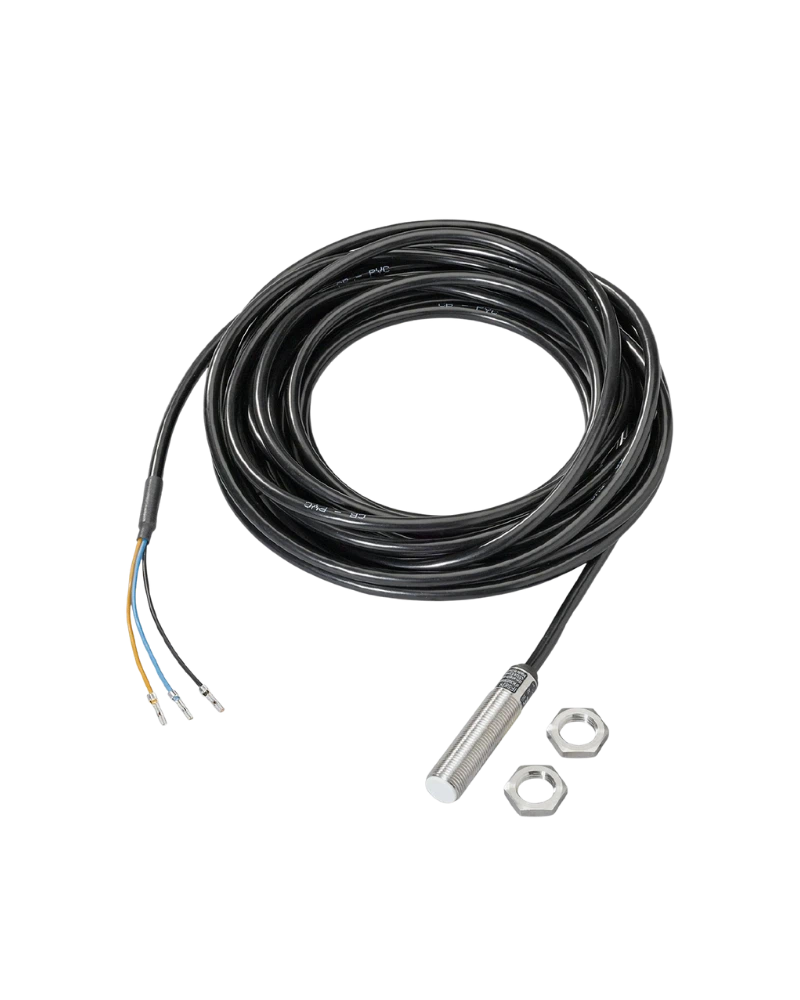
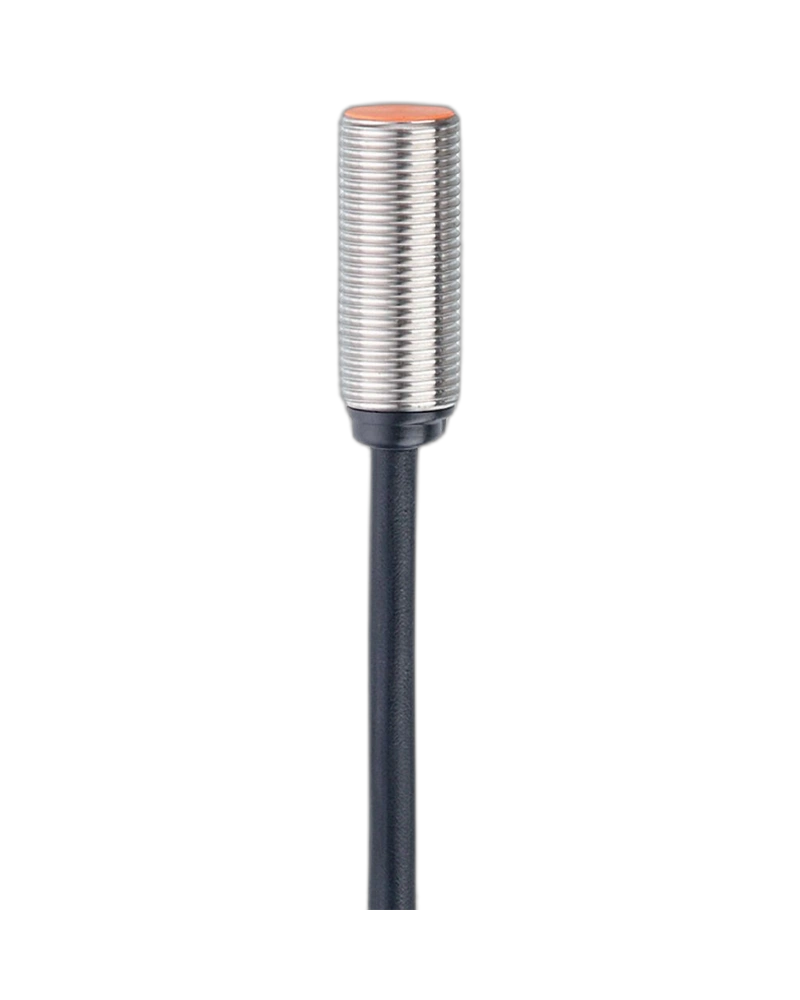
Browse product families and jump into the exact catalog section you need.