
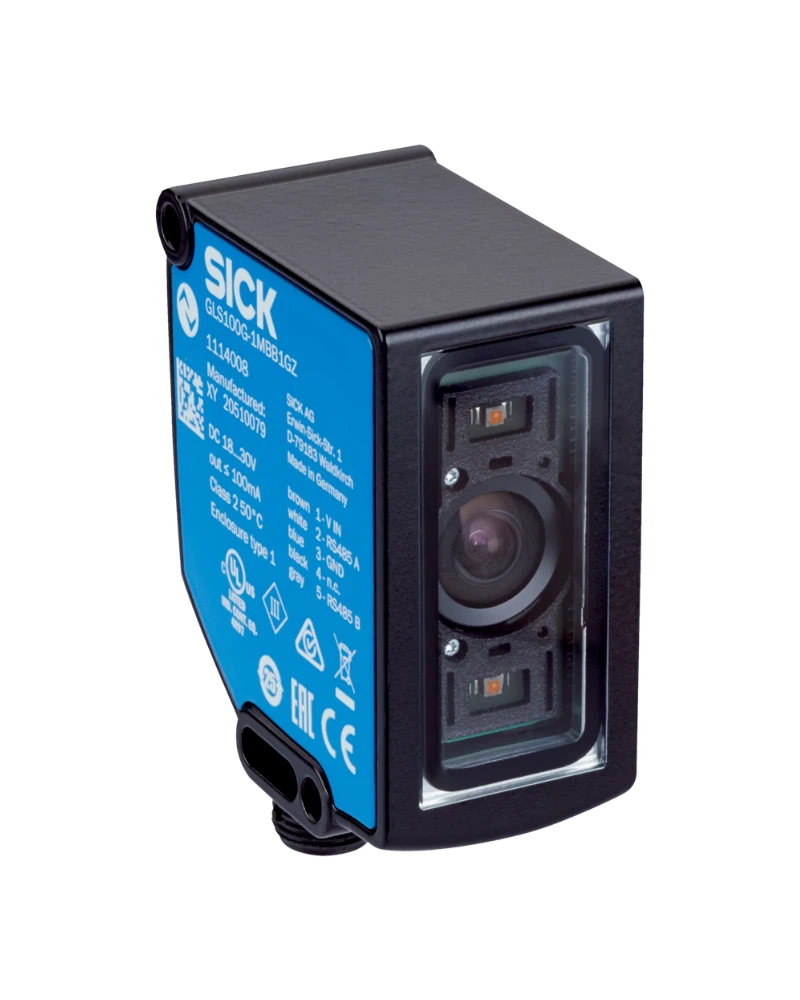
Explore performance details, construction highlights, applications, and technical information in one clear overview.
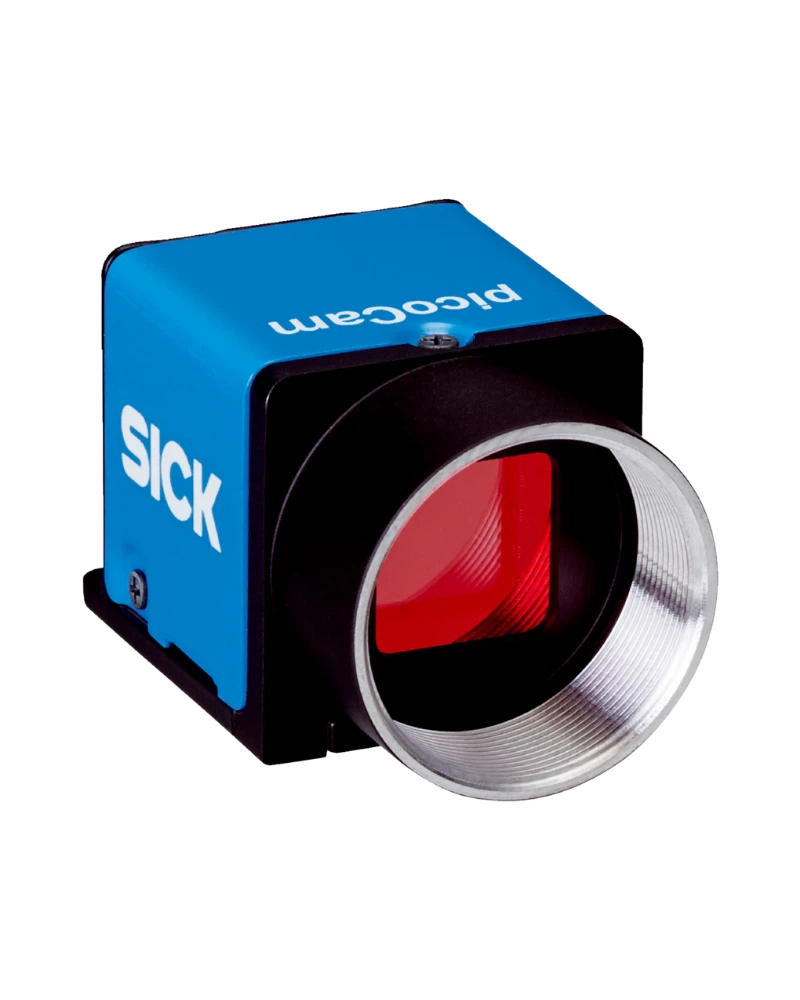
The GLS100 is a cost-effective image-based code reader designed to enable automated guided vehicles (AGVs) or mobile platforms to navigate autonomously. By integrating an advanced camera, the sensor reliably detects and decodes colored tapes, optical line guidance tracks, and various 2D codes such as QR codes, Data Matrix single and multicodes, and code tapes—whether applied in a linear format or arranged in a grid pattern. This capability allows AGVs to maintain precise positioning and path following without requiring complex infrastructure. The sensor provides a flexible and scalable solution that enhances navigation performance while reducing system complexity. Its seamless integration with higher-level controllers enables real-time localization and repositioning, making it ideal for dynamic industrial environments where reliable guidance is essential.
The GLS100 leverages integrated camera technology to detect colored tracks and 2D codes, enabling accurate optical line guidance and navigation. It supports a wide range of code types including QR codes, Data Matrix single and multicodes, and code tapes, which can be applied in both linear and grid configurations. This versatility allows for adaptable routing strategies across different production or logistics environments. The sensor automatically navigates and localizes AGVs by interpreting visual signals from the environment. Decoded data is transmitted to a higher-level controller—such as a PLC—which performs relocalization and repositioning of the mobile platform. This closed-loop system ensures robust, real-time navigation performance even in changing or dynamic settings.
The GLS100 sensor features an integrated camera capable of reliably detecting colored tapes and tracks for optical line guidance as well as various 2D code formats. It supports QR codes, Data Matrix single and multicodes, and code tapes in both linear and grid arrangements. The device is designed to automatically navigate and localize AGVs or mobile platforms based on visual input. Detection accuracy depends on the visibility and contrast of the applied codes or tracks. No specific technical values such as resolution, detection range, or response time are provided by SICK for this product. All performance attributes are derived from its ability to decode standard 2D code types and detect colored guidance elements under typical operational conditions.
The GLS100 is designed to integrate directly into existing AGV systems through a simple connection to a higher-level controller, such as a programmable logic controller (PLC). The sensor provides decoded data—such as position or path information—to the controller for real-time navigation decisions. The PLC then performs relocalization and repositioning of the mobile platform based on this input. No additional hardware interfaces or external processing units are required. Integration is straightforward, enabling rapid deployment in automated logistics and material handling systems. The sensor's flexibility allows it to be used with various guidance schemes, including colored tracks and 2D code grids, making it adaptable to different facility layouts and operational needs.
The GLS100 operates effectively in industrial environments where visual guidance signals are visible and consistent. It is designed for use in settings with controlled lighting conditions that ensure adequate contrast between the codes or tracks and their background. Performance may be affected by extreme ambient light, dust, or obstructions that interfere with camera visibility. The sensor does not specify environmental ratings such as IP protection or temperature ranges. Its operation relies on clear line-of-sight to the guidance elements, including colored tapes or 2D code patterns. For optimal performance, installation should ensure unobstructed views of the detection surfaces and stable lighting conditions.
The GLS100 is ideal for use in automated guided vehicle (AGV) systems within manufacturing, logistics, and warehouse environments. It supports navigation through colored tracks or 2D code grids, enabling precise movement and positioning of mobile platforms. Applications include material handling, intra-warehouse transport, and automated assembly line guidance. The sensor enhances system flexibility by allowing easy reconfiguration of routes using different code types or layouts. Its compatibility with standard PLC-based control systems makes it suitable for integration into existing automation infrastructures without major redesigns. This results in a cost-effective upgrade path for facilities seeking improved navigation reliability and scalability.
| Specification | Value |
|---|---|
| field of view | enables multiple codes or three lines to be detected in parallel |
| width | 100%; |
| height | var(--mat-progress-bar-track-height, 4px); |
| border-top-width | var(--mat-progress-bar-active-indicator-height, 4px); |
| background-image | radial-gradient(circle, var(--mat-progress-bar-track-color, var(--mat-sys-surface-variant)) calc(var(--mat-progress-bar-track-height, 4px) / 2), transparent 0); |
| background-size | calc(calc(var(--mat-progress-bar-track-height, 4px) / 2) * 5); |
| animation | mdc-linear-progress-secondary-indeterminate-scale calc(2s * var(--mat-progress-bar-animation-multiplier)) infinite linear; |
| transform | rotate(180deg) translateX(calc(var(--mat-progress-bar-track-height, 4px) * -2.5)); |
| Detection of colored tapes and | 2D codes |
| Rugged housing | IP65, zinc die cast |
| Small curve radius of | ≥ 0.5 m |
Browse product families and jump into the exact catalog section you need.