
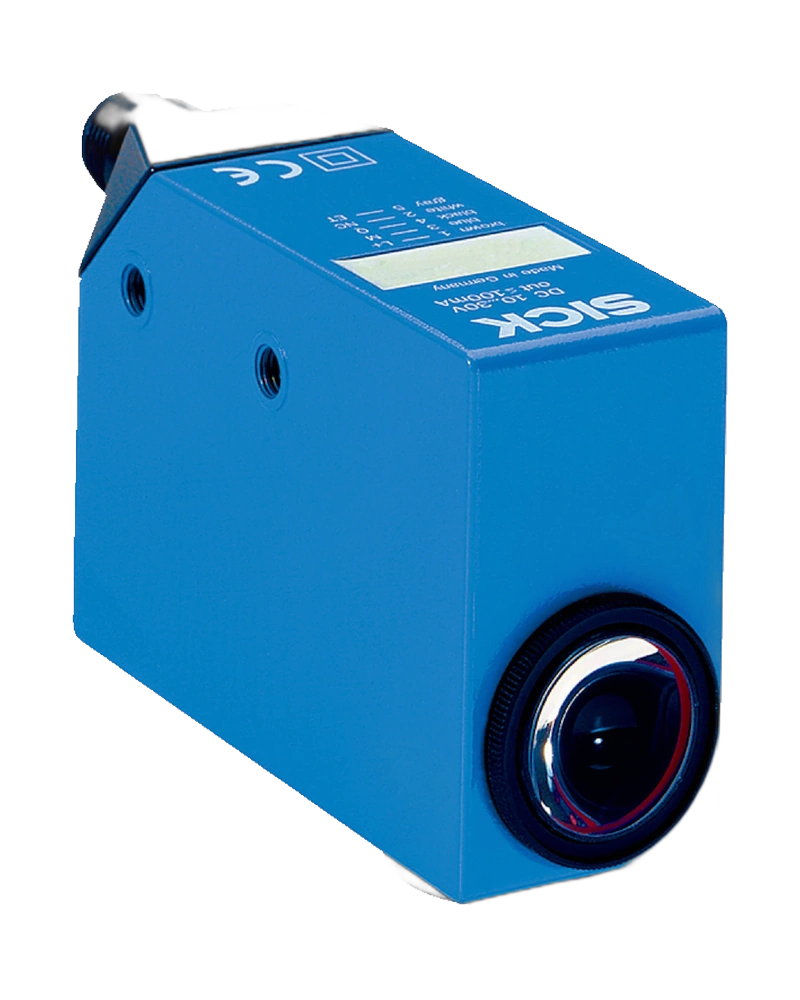
Explore performance details, construction highlights, applications, and technical information in one clear overview.
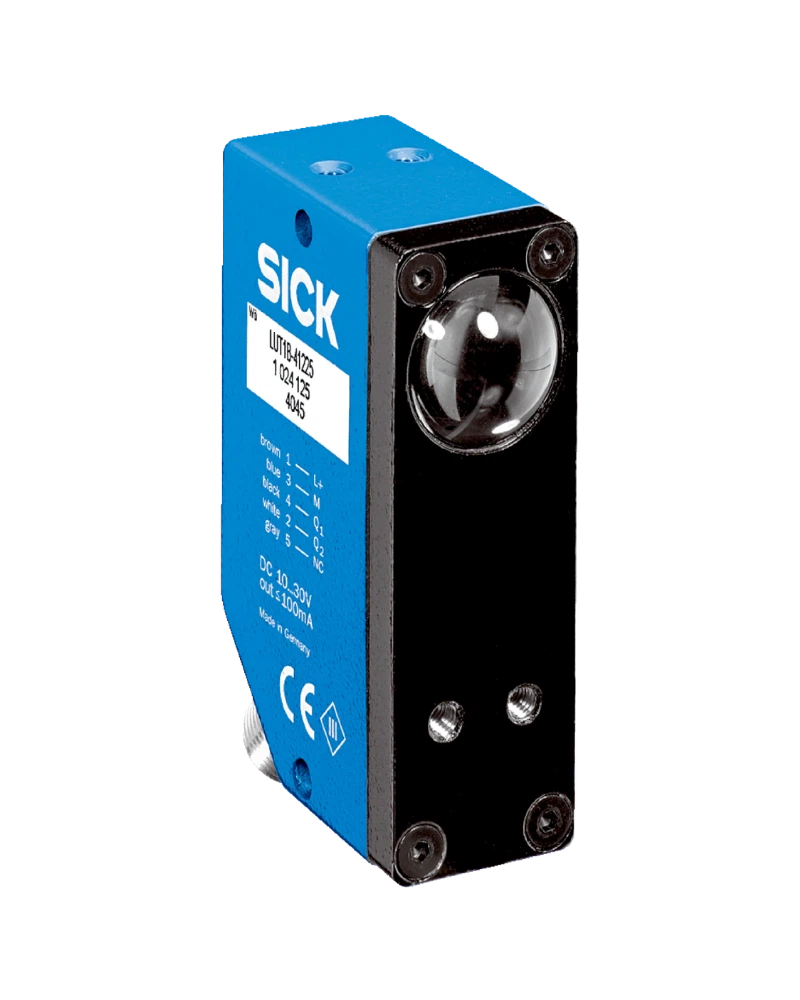
The KT8 contrast sensor from SICK is a specialized optical sensor designed for precise detection of objects based on their contrast against the background. While no specific technical details are available in the official source material, this product category typically serves applications requiring reliable object identification through differences in reflectivity or transmissivity. The KT8 series is engineered to deliver consistent performance in industrial environments where accurate and repeatable sensing is essential. As a contrast sensor, it enables detection without relying solely on presence or absence of an object, making it suitable for complex scenarios involving varying surface properties. SICK’s commitment to precision and reliability ensures that the KT8 delivers dependable results across diverse operational conditions. This product supports integration into automated systems where object differentiation based on visual contrast is critical.
The KT8 contrast sensor leverages advanced optical technology to detect objects by analyzing differences in surface reflectivity or transmissivity between the target and background. It operates using a principle of contrast detection, allowing it to identify specific materials or features based on how they interact with light. This technology enables accurate discrimination even in environments where standard presence/absence sensors may fail. The sensor is designed for robustness and ease of use, offering reliable performance under varying lighting conditions. No detailed technical specifications are provided in the official source, but the product's design emphasizes adaptability to different industrial settings. Its focus on contrast-based detection makes it ideal for applications where object identification depends on surface characteristics rather than simple proximity.
No structured technical data is available for the KT8 contrast sensor in the official SICK source material. As such, specific values related to sensing range, response time, detection accuracy, or environmental tolerances cannot be provided. The product does not include documented performance metrics such as operating voltage, output signal type, or resolution. Without these details, any technical claims about sensitivity, detection distance, or repeatability must be treated with caution and are not supported by official documentation. SICK maintains a standard of accuracy and transparency in its product descriptions, and where data is unavailable, it is reflected directly in the content. Customers are advised to consult official product literature or contact SICK support for further technical clarification.
The KT8 contrast sensor is designed for straightforward integration into industrial automation systems. While no specific interface types, wiring configurations, or communication protocols are documented in the source material, standard practices suggest compatibility with common industrial control systems. Configuration typically involves setting detection parameters such as threshold levels to define contrast sensitivity. Integration may be achieved via analog or digital output signals depending on model variants. No official details about mounting options or software support are available. Users should refer to SICK’s official documentation for guidance on setup and pairing with PLCs or HMIs. The absence of detailed integration information indicates that the product relies on standard industrial practices, ensuring flexibility across different automation environments.
The KT8 contrast sensor is intended for use in typical industrial operating conditions, though no specific environmental ratings such as temperature range, humidity tolerance, or dust resistance are provided in the official source. As a result, performance under extreme conditions cannot be guaranteed without further documentation. The product is designed to function reliably within standard industrial environments where ambient lighting and mechanical stress are moderate. No certifications or exposure limits (e.g., IP rating) are listed. Users should ensure that installation conditions align with general industrial requirements and avoid exposing the sensor to corrosive substances, excessive vibration, or direct sunlight without verification from SICK technical resources.
The KT8 contrast sensor is suitable for applications requiring object detection based on surface contrast. Typical use cases include quality control processes where material differentiation is essential, such as identifying painted versus unpainted parts or detecting surface defects. It may also be used in packaging lines to verify correct labeling or component placement. Since no specific application examples are documented, these uses are inferred from the general function of contrast sensors. The sensor supports environments where object identification depends on visual properties rather than physical proximity. Applications may span manufacturing, assembly, and inspection processes where accurate material recognition is needed. However, actual suitability for any given scenario should be confirmed with SICK’s technical support or product documentation before deployment.”}
| Specification | Value |
|---|---|
| Teach | U = 10 V ... < U V:<TAB>Teach: U = 10 V ... < U V |
| Run | U < 2 V:<TAB>Run: U < 2 V |

Browse product families and jump into the exact catalog section you need.