
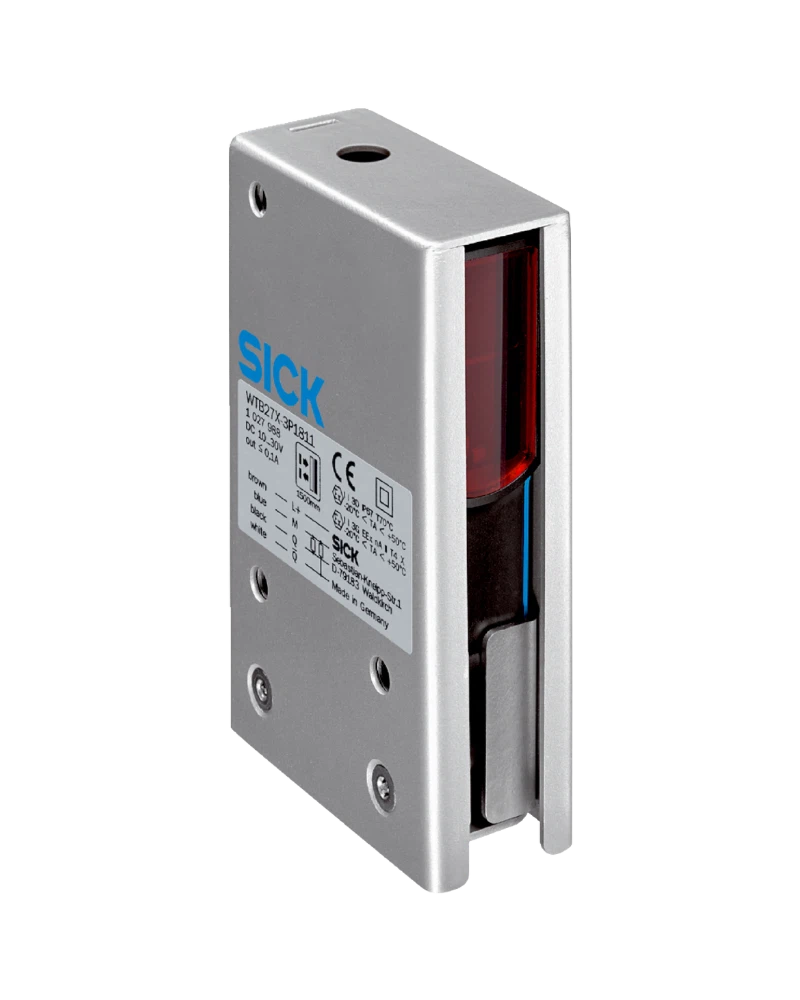
Explore performance details, construction highlights, applications, and technical information in one clear overview.
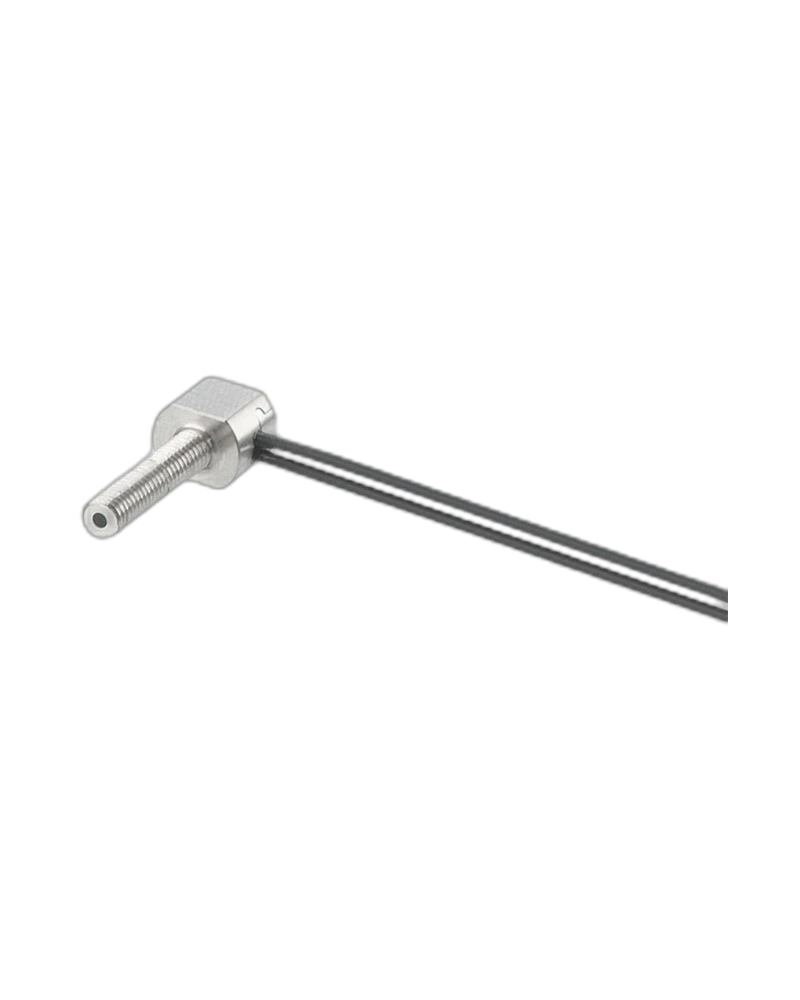
The SICK W27 photoelectric sensor is a reliable detection solution designed for industrial environments requiring precise object sensing. This sensor offers robust performance with a focus on safety and durability, especially in hazardous areas. Available in ready-to-install variants equipped with additional protective metal housings, the W27 meets the requirements of device categories 3D and 3G as defined by ATEX standards. These features ensure compliance with stringent explosion protection regulations, making it suitable for use in potentially explosive atmospheres. The sensor is engineered to deliver consistent detection performance while maintaining ease of integration into existing automation systems. Its design emphasizes long-term reliability and operational safety in demanding industrial settings.
The W27 leverages photoelectric technology for accurate object detection, utilizing a beam-based sensing principle to identify the presence or absence of objects. The sensor is designed with protective metal housings that enhance physical durability and provide an additional layer of safety in hazardous environments. These housings are specifically certified to meet ATEX device categories 3D and 3G, ensuring compliance with explosion protection standards for use in potentially explosive atmospheres. This makes the W27 ideal for applications where both detection accuracy and environmental safety are critical. The technology ensures stable operation under varying conditions while maintaining high sensitivity and reliability over time.
The W27 photoelectric sensor is built with a focus on industrial performance and safety. It features protective metal housings that meet ATEX device categories 3D and 3G, ensuring suitability for use in hazardous zones. The sensor’s design supports reliable operation under demanding conditions. While specific technical values such as detection range, response time, or electrical ratings are not provided in the official source material, its construction emphasizes durability and compliance with safety standards. These characteristics ensure consistent performance across a variety of industrial applications where environmental exposure and safety certification are essential.
The W27 is available in ready-to-install variants that include additional protective metal housings, simplifying integration into existing systems. These configurations are designed to meet ATEX requirements for device categories 3D and 3G, enabling straightforward deployment in hazardous environments without requiring extensive modifications. The sensor supports standard mounting options suitable for automation lines and machinery. Integration is facilitated through common industrial interfaces, allowing compatibility with a range of control systems. No specific connection types or communication protocols are detailed in the source material, but the design prioritizes ease of installation and alignment with existing safety and control frameworks.
The W27 is engineered for operation in industrial environments where exposure to hazardous atmospheres may occur. Its protective metal housings meet ATEX device categories 3D and 3G, allowing safe deployment in potentially explosive gas or dust environments. The sensor is designed to function reliably under typical industrial conditions, including temperature and humidity variations. While exact environmental limits are not specified in the source material, its certification ensures compliance with safety standards for use in zones where flammable substances may be present. This makes it a suitable choice for applications requiring both detection accuracy and explosion protection.
The SICK W27 photoelectric sensor is well-suited for industrial applications involving object presence detection in hazardous environments. Its ATEX-certified housing, meeting device categories 3D and 3G, enables safe use in areas with potentially explosive atmospheres such as chemical processing, pharmaceutical manufacturing, or mining operations. The sensor’s robust design supports reliable operation in demanding settings where safety and precision are paramount. It can be used for detecting parts, products, or materials on conveyors, in assembly lines, or within automated machinery. Its ready-to-install configuration reduces setup time while ensuring compliance with critical safety regulations.
| Specification | Value |
|---|---|
| https | //www.sick.com/us/en/catalog/products/detection-sensors/photoelectric-sensors/w27/c/g196809 |
Browse product families and jump into the exact catalog section you need.