
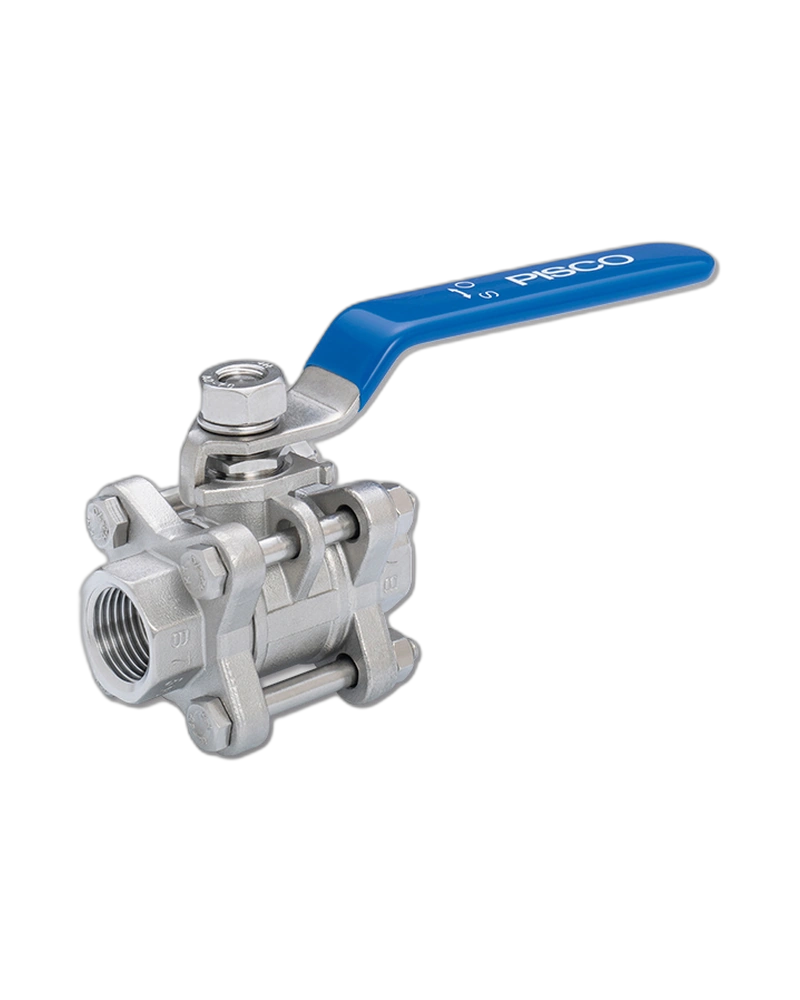
Explore performance details, construction highlights, applications, and technical information in one clear overview.
The Ball Valve SUS316 Equivalent (30 Series) is a full bore ball valve designed for reliable on/off control of fluids in industrial and process applications. It features a robust construction suitable for use with air, inert gases like nitrogen or helium, water, and certain chemicals under controlled conditions. The valve provides a tight shut-off seal while maintaining ease of operation, making it ideal for environments where fluid isolation is critical.
The valve body and main metal components are constructed from SUS316 (also known as CF8M), which offers excellent corrosion resistance. All parts in direct contact with the fluid medium are made from this material, ensuring durability in corrosive or mixed gas environments. Notably, no copper-based metallic materials are used in the flow path to prevent potential chemical interactions or contamination.
The valve is configured as a full bore design and comes supplied as a complete set of three pieces—valve body, stem, and handle—ensuring ready-to-install functionality. The connection interface supports tapered pipe threads including Rc1/4, Rc3/8, and Rc1/2, allowing compatibility with standard piping systems.
The valve is rated for a maximum operating pressure of 6.9MPa at temperatures between -29°C and +232°C (no freezing of liquid). It can also withstand a maximum vacuum of -101kPa. The fluid medium compatibility includes air, inert gases, water (conditional), and certain chemicals (conditional), with specific note that low concentration ozone environments require HNBR or FKM seal materials.
Available in standard sizes with tapered pipe thread options Rc1/4, Rc3/8, and Rc1/2. The valve is supplied as a complete three-piece set and does not include color variants—its appearance is consistent with industrial-grade stainless steel finishes typical of SUS316 components.
The stem is permanently secured within the valve body during assembly, preventing it from coming loose or detaching under operational conditions. This design ensures long-term reliability and safety in service, eliminating the risk of stem disengagement during use.
| Specification | Details |
|---|---|
| Fluid medium | Air, Inert gas such as Nitrogen/Helium (no toxic), Water/Liquid (Conditional*1), Others such as chemicals (Conditional*1) |
| Max. operating pressure (*2) | 6.9MPa (-29
Recommended products
Related Products
CategoryBrowse product families and jump into the exact catalog section you need. |