
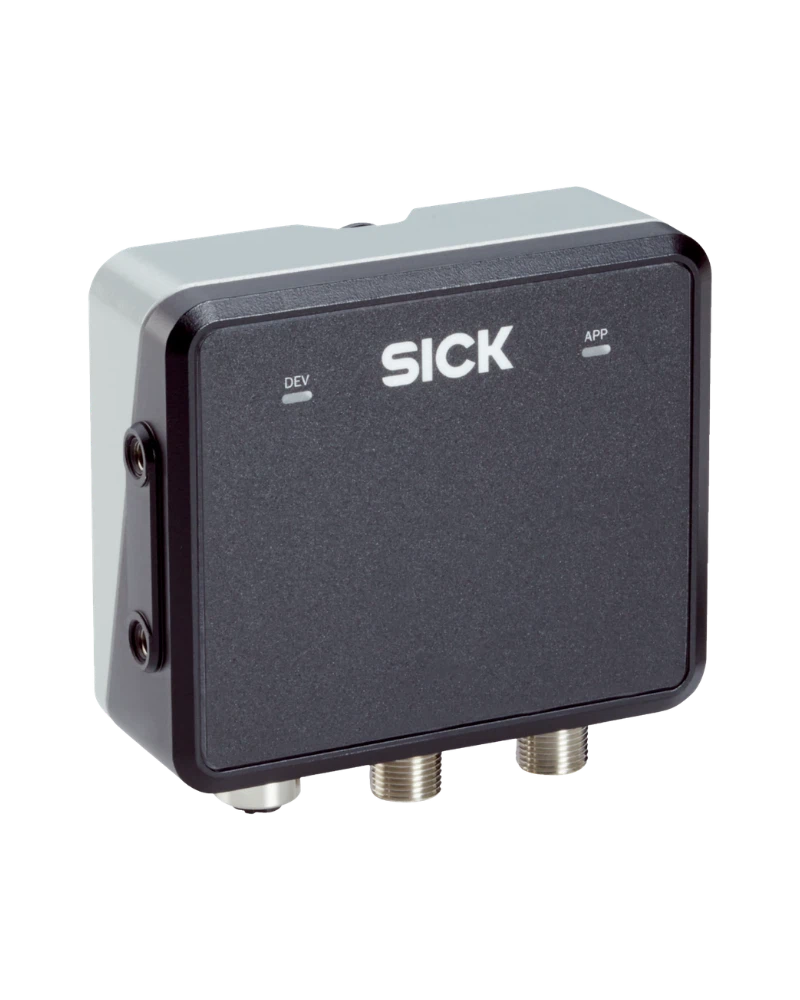
Explore performance details, construction highlights, applications, and technical information in one clear overview.
The RMS1000 is a radar sensor designed for reliable non-contact distance measurement in industrial environments. It operates using frequency-based technology to detect objects across varying distances, making it suitable for applications requiring consistent performance in challenging conditions. The sensor is engineered for ease of integration into automation systems and offers robustness against environmental interference. With straightforward mounting options and standard electrical connections, the RMS1000 supports seamless deployment in a range of industrial settings. SICK provides comprehensive documentation to guide users through installation and operational procedures. All components are designed with safety and reliability in mind, ensuring secure operation under typical industrial conditions. The product is part of SICK’s portfolio of precision sensing solutions, offering dependable performance without compromising on simplicity or maintainability.
The RMS1000 utilizes radar frequency technology to detect object presence and distance with high accuracy. It operates across a defined frequency range suitable for various industrial applications. The sensor employs advanced signal processing to ensure reliable detection even in the presence of environmental noise or interference. Its design supports stable performance under varying conditions, including temperature fluctuations. The device features standard connection types that allow integration into existing control systems via simple pin connections. Signal status indicators provide real-time feedback on operational state. SICK ensures all technical specifications are aligned with safety and reliability standards. The sensor is designed for long-term use with minimal maintenance requirements. It includes basic practical training guidance to support user understanding during setup and operation.
The RMS1000 operates within a specified frequency range, enabling effective detection across different environments. Electrical voltage ratings are provided in the technical data section and must be strictly observed to ensure safe operation. The sensor requires proper cable shielding between devices due to differing ground potentials, which may otherwise lead to signal interference or faults. Connection types include standard pins with defined signal descriptions for status monitoring. Protective caps are available as accessories to safeguard connectors during storage or transport. Voltage levels can cause severe injury or death if not handled correctly. Installation must be completed before energizing the device and all connecting cables must be securely connected. The sensor’s performance is influenced by ambient temperature, which should be considered prior to unpacking and use.
The RMS1000 supports standard pin connections for signal transmission and status monitoring. Connection types are defined with specific pin configurations and signal descriptions to ensure compatibility with control systems. The sensor can be mounted using standard brackets, which are available as accessories. Proper electrical installation is required before operation begins, including correct voltage application and secure cable termination. Shielding of connecting cables is essential to prevent interference due to ground potential differences. All connections must be completed prior to energizing the device. SICK provides guidance on basic practical technical training for safe and effective setup. The integration process emphasizes adherence to safety protocols and proper grounding practices to ensure reliable performance.
The RMS1000 is designed for operation in industrial environments with specific temperature limits. Storage temperature conditions are detailed in the technical data section, which should be referenced before unpacking or long-term storage. The sensor must be operated within its specified environmental range to maintain performance and reliability. Ambient temperature variations may affect operational accuracy and response times. It is recommended that users verify all environmental parameters prior to deployment. The device is not intended for use in explosive atmospheres unless explicitly approved. Installation should follow the manufacturer’s guidelines, particularly regarding grounding and cable shielding. Operation outside defined conditions may lead to reduced performance or failure.
The RMS1000 is suitable for a variety of industrial applications requiring non-contact distance sensing. It can be used in material handling, conveyor monitoring, and level detection scenarios where reliable object detection is essential. The sensor’s ability to function in challenging environments makes it ideal for use in manufacturing, packaging, and logistics processes. Its robust design supports continuous operation under varying conditions. Applications include presence detection, object positioning, and safety interlocks. The device integrates easily into existing automation systems through standard interfaces. SICK reserves the right to modify specifications or documentation without notice. This product is intended for industrial use only and must be operated in accordance with all safety guidelines provided by SICK AG.
| Specification | Value |
|---|---|
| • Storage temperature | see "Technical data", page 32. |
| connector | s or protective caps. |
| response time | Set the time for which an object needs to meet the trigger criteria for |
| interface | (SOPASair)............... 22 |
| connection | status. When a device is connected, the IP |
| mounting | brackets are available as accessories, "Accessories", page 35. |
| Connection | options............................................. 26 |
Browse product families and jump into the exact catalog section you need.