
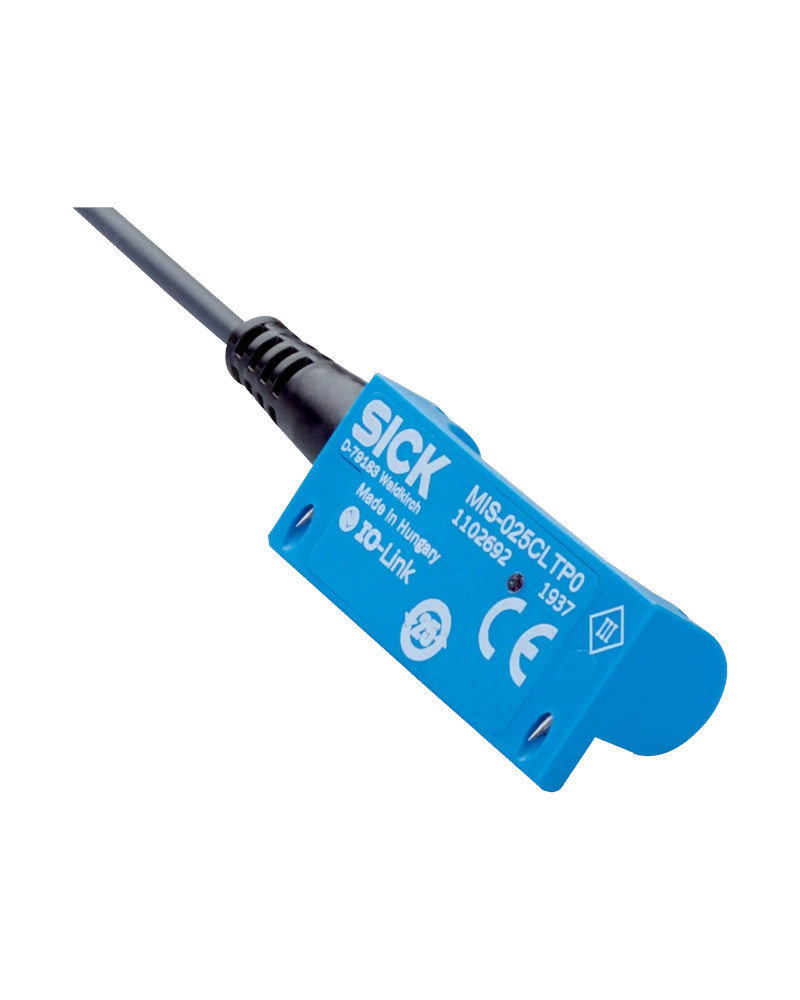
Explore performance details, construction highlights, applications, and technical information in one clear overview.
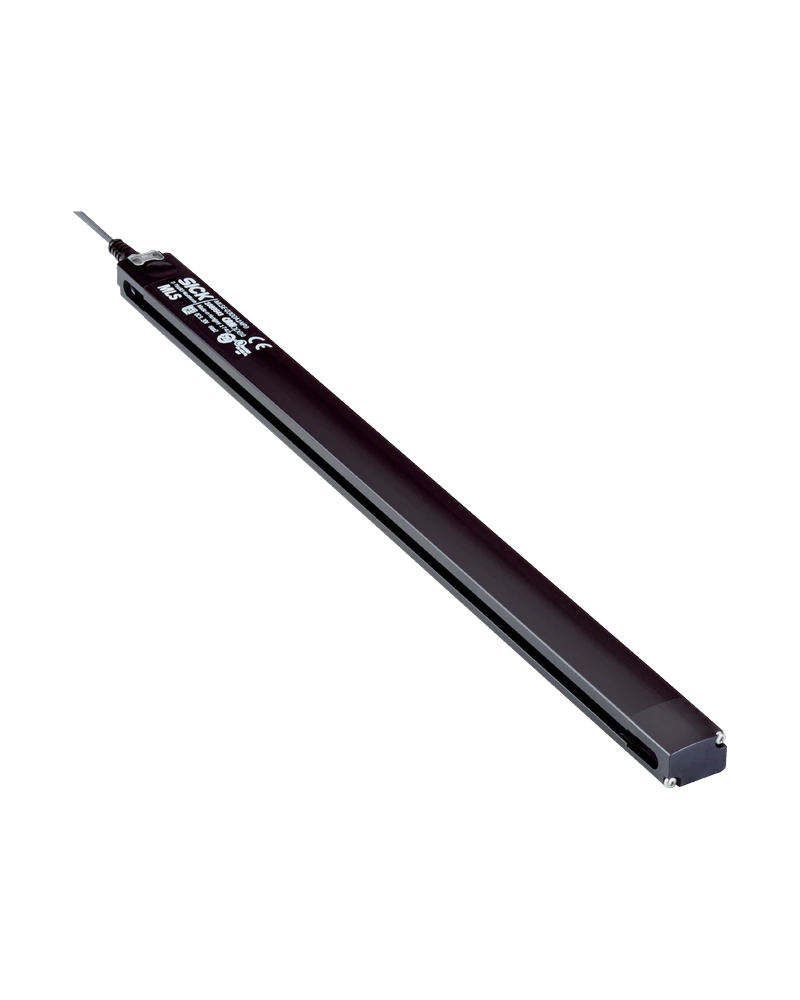
The SICK MIS magnetic-coded identification sensor is specifically designed for easy and reliable tag identification in industrial environments. This sensor enables precise detection and differentiation of magnetic-coded tags, making it ideal for applications requiring accurate part or product identification. With its ability to recognize up to 15 distinct magnetic-coded tags through a default 16-step division, the MIS sensor delivers high-resolution identification performance without complex setup. The system supports multiple output options including analog voltage, current output, and IO-Link, allowing seamless integration into diverse control systems. Its robust design ensures consistent operation in demanding industrial settings where reliable identification is critical.
The SICK MIS sensor leverages magnetic coding technology to provide accurate and repeatable identification of tagged objects. It is engineered for simple, fast identification tasks without requiring complex programming or calibration. The sensor can detect both the presence of a tag and its specific identity through dedicated output signals. In addition to identifying tags, it provides a digital switching output that indicates whether a tag is present, enabling real-time monitoring in automated processes. This dual functionality—identification and presence detection—enhances operational efficiency by reducing false readings and improving system responsiveness.
The MIS magnetic-coded identification sensor outputs the tag number via analog voltage, current output, or IO-Link interface. By default, the system is configured with a 16-step division, allowing differentiation of up to 15 unique magnetic-coded tags. This configuration ensures precise identification while maintaining compatibility across various industrial applications. The sensor delivers reliable performance through its ability to detect both tag presence and identity, supporting straightforward integration into existing automation systems. No additional calibration or setup is required for standard operation, ensuring immediate usability upon installation.
The SICK MIS sensor offers flexible output configuration to match different control system requirements. Users can select between analog voltage, current output, or IO-Link as the primary method of tag data transmission. The default 16-step division enables identification of up to 15 distinct tags, simplifying setup for common identification tasks. Integration with PLCs and HMIs is straightforward due to the availability of multiple communication options. The digital switching output provides a simple signal for detecting tag presence, enabling real-time feedback in automated processes without additional hardware or software.
The SICK MIS sensor is designed for reliable operation in standard industrial environments. It performs consistently under typical temperature and humidity conditions found in manufacturing and assembly lines. While specific environmental ratings are not provided, the sensor’s design ensures durability and stability during routine use. Its magnetic coding technology remains effective across a range of ambient conditions, making it suitable for continuous operation in production facilities where identification accuracy is essential.
The SICK MIS magnetic-coded identification sensor is ideal for applications requiring reliable part or product identification. It is commonly used in assembly lines, packaging systems, and quality control processes where tracking individual components is necessary. The ability to detect both tag presence and identity supports efficient monitoring of production flow and helps prevent errors during material handling. Its simple setup and proven performance make it a practical solution for industries such as automotive, electronics, and pharmaceuticals where accurate identification is critical to process integrity and traceability.
| Specification | Value |
|---|---|
| switching output | for presence detection of the tag |
| repeatability | , a second presence-detecting sensor is no longer needed. |
| width | 100%; |
| height | var(--mat-progress-bar-track-height, 4px); |
| border-top-width | var(--mat-progress-bar-active-indicator-height, 4px); |
| background-image | radial-gradient(circle, var(--mat-progress-bar-track-color, var(--mat-sys-surface-variant)) calc(var(--mat-progress-bar-track-height, 4px) / 2), transparent 0); |
| background-size | calc(calc(var(--mat-progress-bar-track-height, 4px) / 2) * 5); |
| animation | mdc-linear-progress-secondary-indeterminate-scale calc(2s * var(--mat-progress-bar-animation-multiplier)) infinite linear; |
| transform | rotate(180deg) translateX(calc(var(--mat-progress-bar-track-height, 4px) * -2.5)); |
Browse product families and jump into the exact catalog section you need.